IEB Physical Sciences Paper 2 (Chemistry): 16 Nov 2026 plan
7 min read · Updated 8 November 2026 · By the Study Market team
IEB Physical Sciences Paper 2 (Chemistry): 16 November 2026, 09:00 to 12:00. Confirm the date, time and venue with your school, as they have the final timetable.
Eight days is enough to improve a lot in Chemistry if you spend it on practice instead of rereading. This guide shows how the paper is built, then turns that into a plan.
One clash to know about
Mathematical Literacy Paper 2 is also at 09:00 on 16 November. This only matters if you take both subjects, and most students do not. If your school timetable shows both for you, speak to your school now, because they will arrange how it is handled.
What is in the paper
According to the IEB's Subject Assessment Guidelines for Physical Sciences, Paper II (Chemistry) runs for three hours and is marked out of 200. Those marks are scaled down to 150 of the subject's total of 400. No more than 10% of the marks may come from multiple-choice questions, so most of your marks are for written and calculated answers.
The guidelines give an approximate weighting for each content area. Each figure can shift by about 10 marks either way.
| Content area | Marks | Share |
|---|---|---|
| Electrochemistry | 40 | 20% |
| Organic chemistry | 40 | 20% |
| Quantitative chemistry | 30 | 15% |
| Chemical equilibrium | 25 | 12.5% |
| Acids and bases | 25 | 12.5% |
| Chemical bonding | 20 | 10% |
| Energy change and rates of reactions | 20 | 10% |
The same guidelines split the questions by thinking skill: about 15% knowledge and recall, 40% comprehension and routine exercises, 35% application and analysis, and 10% synthesis and evaluation. Roughly 55% is therefore recall, understanding and routine work, which is where steady practice pays off.
You also get a booklet with the paper. It holds formulae and equations, physical constants, standard electrode potentials and half-reactions, and the Periodic Table with electronegativity values. A formula in it may be there to use in a calculation, or it may stand for a law or principle that you must also be able to explain in words. So learn to state each law in a sentence as well as use its formula. Ask your teacher for a copy of the booklet to practise with, so that you know where to find things before the exam.
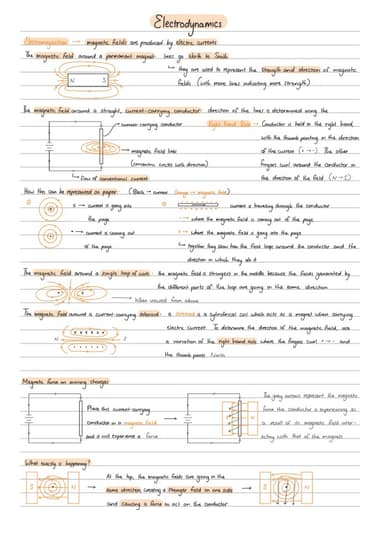
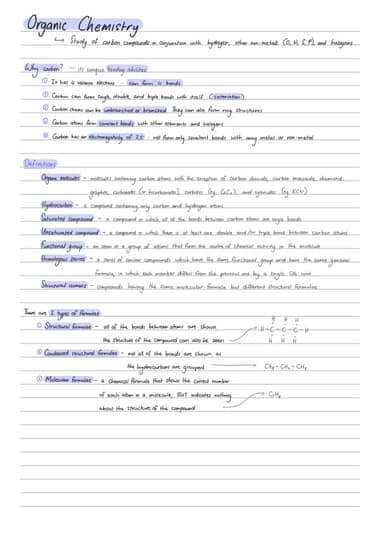
Physical Sciences notes from students with top marks
Check the seller's mark before you buy. A green tick means we've checked it against a school report. Preview pages free.

A suggested way to split your time
Three hours over 200 marks is about 0.9 minutes per mark. Use this as a suggestion, and adjust to how fast you work.
- Electrochemistry (40 marks): about 36 minutes
- Organic chemistry (40 marks): about 36 minutes
- Quantitative chemistry (30 marks): about 27 minutes
- Chemical equilibrium and acids and bases (25 marks each): about 22 minutes each
- Chemical bonding, and energy change and rates (20 marks each): about 18 minutes each
That adds up to 180 minutes. Treat a few minutes of that as your checking time. Electrochemistry and Organic together carry about 40% of the paper, so they get your revision time first.
Your eight-day plan
8 to 9 November: find the gaps
- List the seven content areas in the table. Rate each one: strong, shaky or weak.
- Do a recent IEB Chemistry past paper under timed conditions, or as much of it as you can. Mark it with the marking guideline.
- For each lost mark, write down why. Was it a content gap, a calculation slip, a missing unit, or a question you misread? The reason decides how you fix it.
10 to 12 November: Electrochemistry and Organic first
- Start with Electrochemistry and Organic, since together they are about 40% of the paper. Spend roughly half of these three days on them, then split the rest between your other weak areas, using the marks in the table to decide where each hour goes.
- Relearn the idea from your notes, then do questions straight away. Practise reading half-reactions and electrode potentials from the booklet, so that you are fast with it on the day.
- Write out the laws, principles and definitions word for word, since the booklet may give the formula but you must explain the idea.
- Keep a single page of "mistakes I keep making". Reread it every evening.
Note that 12 November also has English Paper 1 in the morning if you take English, and 13 November may have other papers. See our IEB matric exam timetable guide and plan around your own subjects.
13 to 14 November: full-paper practice
- Do one full Chemistry paper under real conditions: three hours, no phone, and only the booklet and calculator you will have in the exam.
- Practise using the 0.9 minutes per mark idea. Note where you ran over time.
- Mark it properly. Redo the questions you lost marks on, without looking at the memo, until you can get them right.
15 November: the day before
- No new topics. Reread your laws and definitions, your mistakes page and the booklet's contents.
- Do a short set of questions in the morning, then stop.
- Pack your bag, check your calculator and have your admission documents ready.
- Sleep on time.
16 November: exam morning
Eat, arrive early and read the instructions. Look through the whole paper first. Start where you are confident, so you collect marks and settle your nerves. Show every step of a calculation, with units, because marks are normally given for method as well as the final answer. Leave a few minutes to check.
How to practise a Chemistry question
- Read the question twice. Underline what is given and what is asked.
- Write down the relevant equation or definition before you substitute anything.
- Show each step, with units, and keep your significant figures sensible.
- For written answers, use the right terms and link cause to effect in a sentence or two.
- Check that your answer is reasonable. A negative mass or a percentage above 100 is a clue that something went wrong.
Because 35% of the paper is application and analysis, also practise questions you have not seen before. Take a familiar idea and use it in an unfamiliar setting.
Use past papers well
Past papers are the most useful tool you have this week. Do them under time, mark them, and learn from the marking guideline. See our guide on how to use past papers for a routine. Marking guidelines show the main acceptable answers, not every possible one, so do not panic if your wording differs a little but your idea is the same.
For longer-term advice, read our guide on how to study Physical Sciences in Grade 12.
Notes from other students
Making your own summary pages is the best way to learn, but if you are short of time or stuck on a topic, another student's notes can help. On Study Market you can browse IEB Grade 12 Physical Sciences notes. You can preview free pages before you buy and see the seller's marks, and a verified tick means those marks were checked against a school report. Choose notes that match your syllabus, and use them to fill gaps, not to replace practice. Doing questions is what gets you through Chemistry.
Get help for a stubborn topic
If a topic still does not make sense after you have tried your notes, the textbook and the memo, one session with a tutor can save you days. Browse the tutors page and read our guide on how to find a good tutor. With eight days left, book soon.
Frequently asked questions
When is IEB Physical Sciences Paper 2 in 2026?
16 November 2026, from 09:00 to 12:00. Paper 2 is the Chemistry paper. Confirm the details with your school.
How many marks is Paper 2 and how long is it?
It is 3 hours and 200 marks, according to the IEB's Subject Assessment Guidelines. The marks are scaled to 150 of the subject's 400.
Is the paper mostly multiple choice?
No. At most 10% of the marks are multiple choice, so expect mostly written and calculated answers.
What do I get with the paper?
A booklet with formulae and equations, physical constants, standard electrode potentials and half-reactions, and the Periodic Table with electronegativity values. Learn where things are in it before the exam.
What should I study in the last week?
Start with Electrochemistry and Organic, since they carry about 40% of the marks, then work through your other weak areas in line with the weighting. Do full timed past papers and mark them. Spend your last evening on laws, definitions and your list of repeated mistakes, not on new content.
Where do I find the IEB guidelines and past papers?
On ieb.co.za, where the Subject Assessment Guidelines and recent past papers and marking guidelines are posted. Your teacher can help if you struggle to find them.
Notes from students who got the marks
See the seller's marks before you buy, with a green tick when we've checked them against a school report. Preview pages free.